

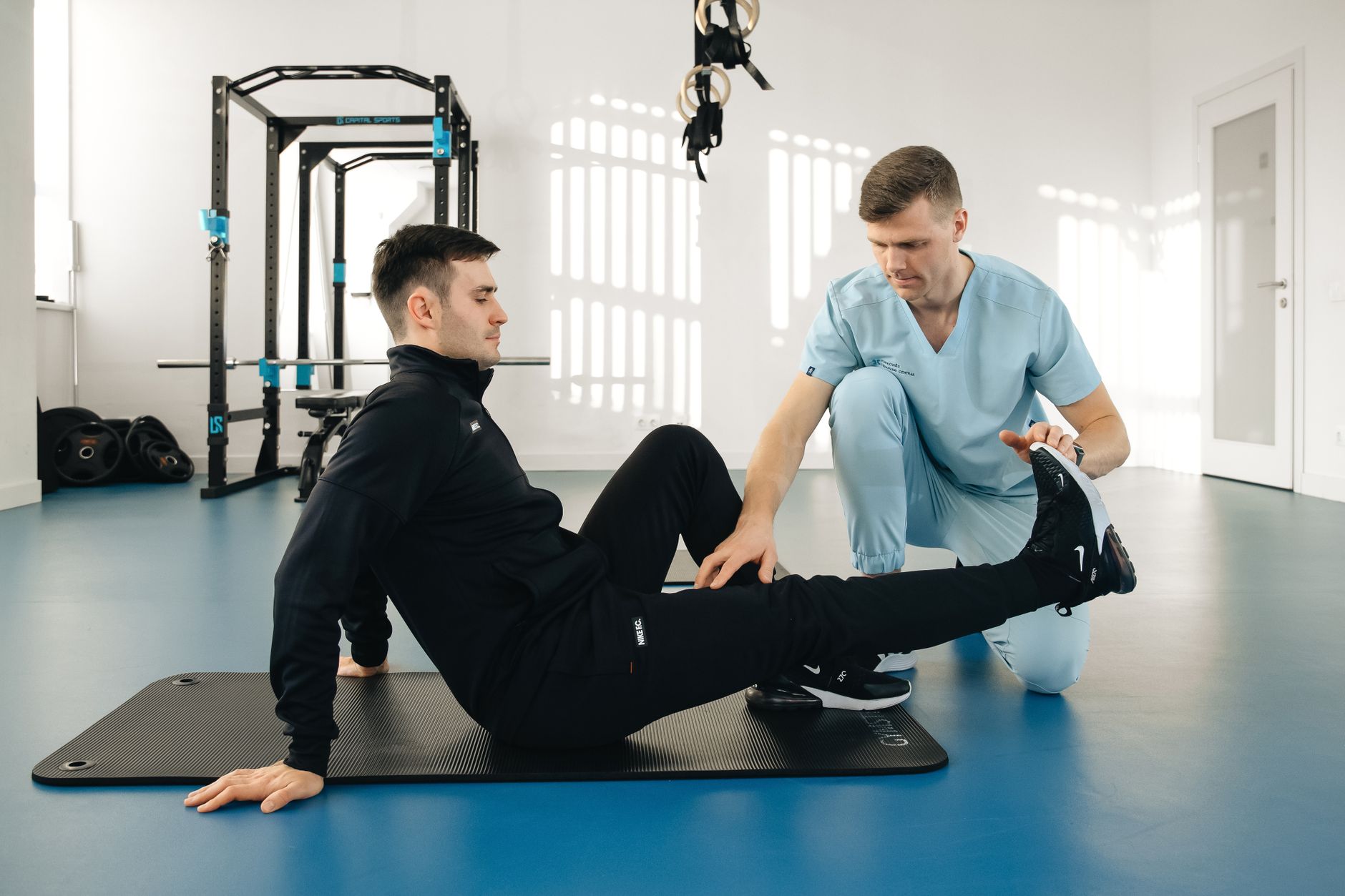
What Does A Physical Therapist Assistant Do?
A physical therapist assistant delivers treatment under a physical therapist's plan of care. You guide exercise, apply modalities, progress patients within the plan, and document how they responded. What you do not do is the initial examination or the diagnosis, because those belong to the supervising therapist.
In practice this means a physical therapist assistant has more sustained patient contact than almost anyone in the clinic. The therapist evaluates and sets direction; you are the one in the room for most of the hours that follow, which is why patients often know their assistant better than their therapist.
The scope boundary is a legal one, not a courtesy. State practice acts define what an assistant may do and what level of supervision is required, and they vary. Working outside that scope is a licensure problem, so the limits are worth learning properly rather than absorbing from whoever trained you.
How to Become a Physical Therapist Assistant, Step by Step
Durations are typical, not guaranteed. The steps are in the order they actually have to happen.
-
Confirm the Program Is a CAPTE-Accredited PTA Program
before you enroll
This is step one for a reason. Only a CAPTE-accredited physical therapist assistant program makes you eligible for the licensing exam. Not a kinesiology associate, not exercise science, not a general health sciences transfer degree. Check CAPTE's directory directly.
-
Complete the Associate Degree
2 years
Roughly five semesters at most programs, combining classroom science with hands-on lab work in therapeutic exercise, modalities and patient handling.
-
Complete the Clinical Education Requirement
included
Full-time supervised placements built into the program, usually across more than one setting. These are in person and they are the reason PTA programs cannot be done fully online.
-
Pass the NPTE-PTA
months
The National Physical Therapy Examination for assistants. It is the same testing body as the therapist exam with a scope-appropriate version.
-
Get Licensed in Your State
weeks
Every state licenses physical therapist assistants. Requirements beyond the exam vary slightly, and jurisprudence exams are common.
How Much Do Physical Therapist Assistants Make?
The figure quoted for any occupation is normally its median, which is the midpoint of a distribution and not an offer. Both published tails are below.
Annual Wages, U.S.
BLS OEWS · May 2025
- 10th pct
- $47,750
- 25th pct
- $59,820
- Median
- $68,380
- 75th pct
- $78,680
- 90th pct
- $89,510
112,430 people were employed in this occupation nationally, and the median hourly wage was $32.88.
Where Physical Therapist Assistants Earn the Most
Employment sits beside each median because the two qualify each other. A high median resting on a few dozen jobs is a thinner fact than the same median on thousands.
| State | Median | 10th pct | Employed |
|---|---|---|---|
| California | $83,110 | $59,500 | 9,400 |
| Massachusetts | $79,460 | $62,030 | 2,640 |
| New Jersey | $78,440 | $62,620 | 1,810 |
| Texas | $78,000 | $43,900 | 10,510 |
| Maryland | $77,670 | $39,260 | 1,430 |
| Alaska | $77,640 | $65,640 | 110 |
| Connecticut | $75,880 | $62,070 | 980 |
| Nevada | $75,520 | $49,140 | 560 |
| Delaware | $74,610 | $51,750 | 340 |
| Virginia | $73,760 | $54,170 | 3,370 |
Physical Therapist Assistant Education Requirements
The level is not the interesting part here. 84% of O*NET respondents named an associate degree, and the job is licensed everywhere, so the requirement is clear. What matters is which associate degree, and this is where students using a site like this one can go badly wrong.
The associate rankings on this site are transfer-oriented exercise science and kinesiology degrees. They are good at what they are for, which is transferring into a bachelor's. They are not physical therapist assistant programs, they are not CAPTE-accredited, and completing one does not make you eligible for the NPTE-PTA. Nothing about the two credentials being the same length makes them interchangeable.
Programmatic accreditation working as a hard gate is not unique to this job, and the clearest parallel is worth reading before you shortlist anything: the same kind of gate CAATE put in front of athletic training shut an entire degree level out of the profession. Accreditor first, degree title second, in both fields.
If you want to be a physical therapist assistant, search CAPTE's accredited program directory and apply to those programs specifically. If you want to keep the door open to a bachelor's and beyond, a transfer-oriented associate is the right choice and this is not your route. Deciding which of those two you are is the whole question.
- Associate's degree
- 84%
- Bachelor's degree
- 15%
- Professional degree
- 1%
O*NET Job Zone 3, medium preparation needed. Shares do not total 100% because only the most-reported levels are published. O*NET 31-2021.00
Do Physical Therapist Assistants Need a License or Certification?
Licensure requires graduating from a CAPTE-accredited physical therapist assistant program and passing the NPTE-PTA, in every state. Read this carefully if you are comparing associate degrees on this site: a kinesiology or exercise science associate degree is not a CAPTE-accredited PTA program and does not lead to PTA licensure. The associate rankings here are transfer-oriented exercise science degrees, which is a different credential for a different purpose.
Where Do Physical Therapist Assistants Work?
Outpatient orthopaedic clinics employ the largest share, and the work there is the closest to what people picture: post-surgical recovery, sports injuries, chronic pain. Skilled nursing facilities are the next largest and tend to pay better, partly because the caseload is harder and the productivity expectations higher.
Home health pays the best of the common settings and asks the most independence, since you are working in someone's house without a therapist down the hall. Hospitals and school systems make up much of the remainder.
At 112,430 jobs this is a big, geographically distributed field, which is one of its real advantages over the smaller occupations here. California leads on median pay at $83,110, with Massachusetts and New Jersey next. Our salary page covers all 51 areas.
A Day in the Life of a Physical Therapist Assistant
An outpatient day is a rolling schedule, often two patients at once at staggered points in their sessions. You set someone up on their exercise progression, move to the next, come back, correct form, add load, and keep both moving without either feeling parked.
You are physically involved for most of it. Manual resistance, gait work where you are the thing preventing a fall, transfers in the nursing setting. People underestimate how much of a body job this is until they have done a full week of it.
The relationship is the part people stay for. You see the same patients two or three times a week for weeks, which is more continuity than the supervising therapist gets. You are there for the frustrating middle stretch where nothing seems to be improving, and you are there when it does. The trade-off is that you did not write the plan, and when you disagree with it your route is to raise it with the therapist rather than to change it.
Pros and Cons of Being a Physical Therapist Assistant
Both lists are drawn from the same data as the rest of this page. Nothing here is softened.
What works
- The strongest return on schooling in this field: a median of $68,380 for two years, above what a four-year exercise physiology degree earns.
- Licensed in every state, which protects the role and makes the credential portable.
- 112,430 jobs across every region, so you are not dependent on one local employer.
- Sustained patient relationships, with more continuity than the supervising therapist usually has.
What doesn’t
- The ceiling is firm. The top tenth reach $89,510, and getting past it means a doctorate and becoming a physical therapist.
- You execute a plan you did not write, and disagreeing with it is a conversation rather than a decision.
- Physically demanding in a way that accumulates, especially in skilled nursing settings.
- Easy to enroll in the wrong associate degree. A kinesiology associate looks similar and leads somewhere else entirely.
Programs That Lead Here
Physical Therapist Assistant FAQ
How long does it take to become a physical therapist assistant?
Can you become a physical therapist assistant with a kinesiology degree?
How much does a physical therapist assistant make?
What is the difference between a PTA and a physical therapist?
Do physical therapist assistants need a license?
Can a PTA become a physical therapist later?
Is being a physical therapist assistant worth it?
What are PTA program requirements?
Sources
- BLS Occupational Employment and Wage Statistics, May 2025, wages and employment
- O*NET OnLine, 31-2021.00, education distribution and Job Zone