What Does An Exercise Physiologist Do?
An exercise physiologist prescribes exercise as treatment. Someone arrives with a diagnosis, often a cardiac event or a chronic pulmonary condition, and you assess how their body responds to exertion. Then you build a program around what you measured and adjust it as they improve.
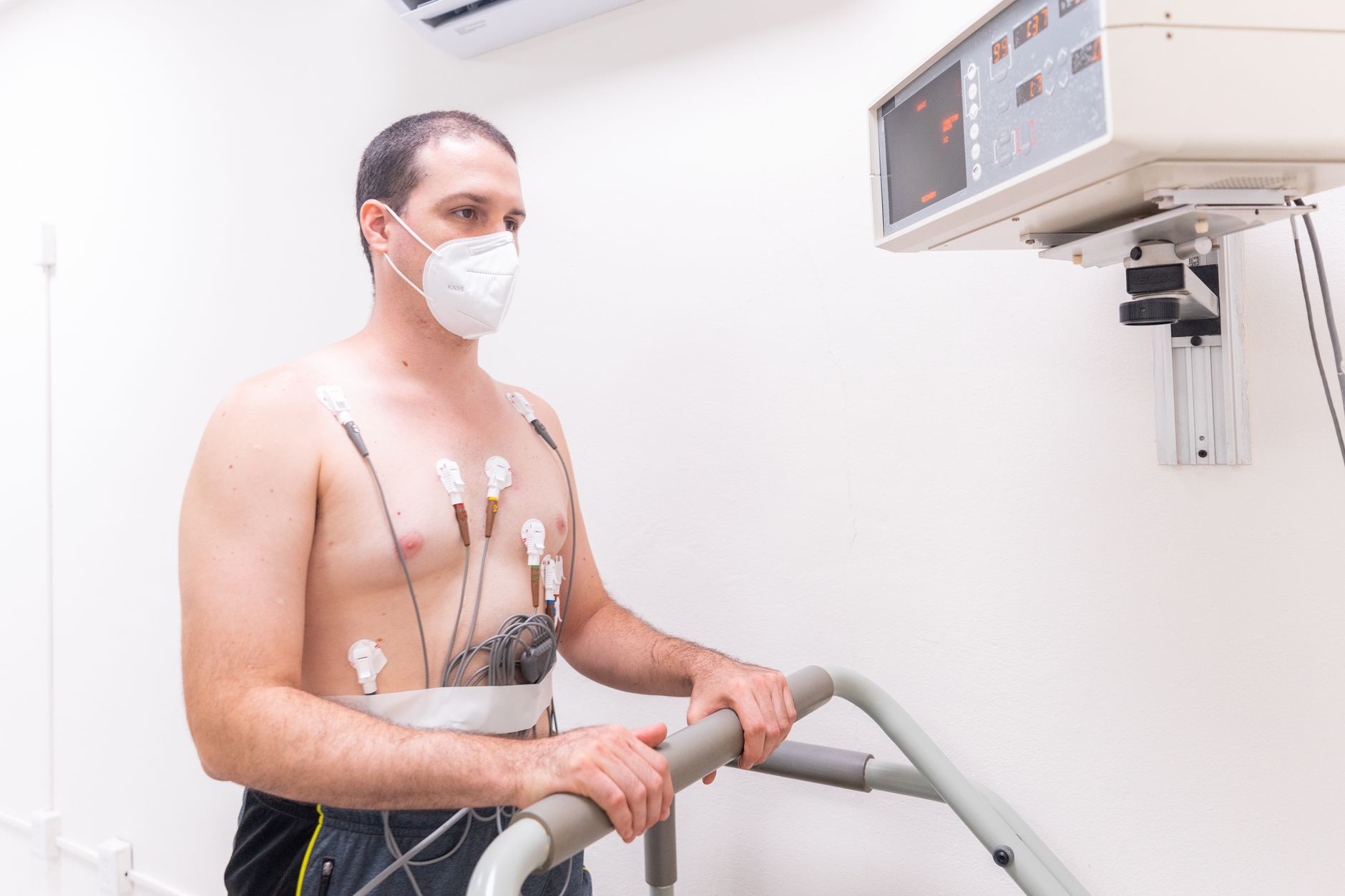
The distinction that matters, and the one most people get wrong before they look into the job, is that this isn't personal training. A personal trainer works with clients who want to get fitter. An exercise physiologist works with patients who've been referred, usually by a physician, and the work is documented against clinical goals. You'll spend real time on charting. You'll run graded exercise tests, watch ECG output, track blood pressure and oxygen saturation during exertion, and stop a session when the numbers say to stop.
Most of the jobs are in cardiac rehabilitation, which is where an exercise physiologist fits most naturally into a care team. You're the person who knows what safe progressive loading looks like for someone six weeks after a bypass. Nobody else on that team owns that.
That care team may also include a registered dietitian, but the education route is different: graduate education, an ACEND-accredited pathway, supervised practice and a national exam. If you are comparing the movement and nutrition sides of the same team, this guide to becoming a registered dietitian nutritionist lays out that credential sequence without treating an online degree as proof of eligibility.
How to Become an Exercise Physiologist, Step by Step
Durations are typical, not guaranteed. The steps are in the order they actually have to happen.
-
Get a Bachelor's in Exercise Science, Exercise Physiology or Kinesiology
4 years
This is the step with the least ambiguity. The ACSM-EP names those three fields specifically, so a degree outside them can leave you ineligible for the credential employers ask for. Take the lab courses seriously: anatomy, physiology, biomechanics and exercise testing are the ones you'll actually use.
-
Get Your Clinical Hours While You're Still Enrolled
concurrent
Do this early and it changes your options later. If you want the clinical credential from a bachelor's you need 1,200 hands-on hours, which is a lot to find after you graduate and are working. Internships, practicum placements and cardiac rehab volunteering all count toward it.
-
Hold a Current CPR/AED Certification
weeks
Required to sit the ACSM-EP exam, and from 2027 you'll need First Aid as well. It's cheap and fast, and it lapses, so check the date before you register for anything.
-
Sit the ACSM-EP Exam
months
The exam runs $350 for ACSM members and $460 for non-members, and a $50 non-refundable application fee is inside that price. Joining ACSM first is usually cheaper than not.
-
Decide Whether You're Going Clinical
ongoing
The ACSM-CEP is the credential that opens hospital-based cardiac and pulmonary rehab. From a bachelor's it needs 1,200 clinical hours. A master's in clinical exercise physiology cuts that to 600, which is the real argument for the extra degree.
How Much Do Exercise Physiologists Make?
The figure quoted for any occupation is normally its median, which is the midpoint of a distribution and not an offer. Both published tails are below.
Annual Wages, U.S.
BLS OEWS · May 2025
- 10th pct
- $42,760
- 25th pct
- $49,620
- Median
- $59,460
- 75th pct
- $67,230
- 90th pct
- $80,560
8,560 people were employed in this occupation nationally, and the median hourly wage was $28.59.
Where Exercise Physiologists Earn the Most
Employment sits beside each median because the two qualify each other. A high median resting on a few dozen jobs is a thinner fact than the same median on thousands.
| State | Median | 10th pct | Employed |
|---|---|---|---|
| Washington | $81,310 | $65,830 | 160 |
| Oregon | $71,630 | $56,010 | 80 |
| Minnesota | $67,230 | $61,640 | 250 |
| Massachusetts | $65,950 | $60,060 | 180 |
| New Jersey | $64,680 | $55,620 | 130 |
| Colorado | $63,800 | $45,210 | 370 |
| New Hampshire | $63,590 | $51,630 | 50 |
| Wisconsin | $63,210 | $55,100 | 340 |
| Connecticut | $62,510 | $46,570 | 100 |
| California | $62,440 | $36,970 | 640 |
Exercise Physiologist Education Requirements
A bachelor's is the entry point, and O*NET's numbers back that up: 59% of respondents said a bachelor's degree is required. But look at the rest of that distribution before you plan around it. Another 32% said a master's, and 9% said a doctorate. That's a third of the field reporting that the job they're in asks for graduate work.
What that spread tells you is that the bachelor's gets you in and the master's moves you up. It also matters for the clinical track specifically, where the master's isn't about prestige. It halves the clinical hours the ACSM-CEP requires, from 1,200 to 600. If hospital rehab is the goal, run that arithmetic against a year or two of tuition before you decide.
One thing to check on any program you're considering: the degree title. Every program in our rankings shares a single federal classification code, but the schools call it different things, and the ACSM-EP names exercise science, exercise physiology and kinesiology by name. A degree titled around sport management sits under the same code and may not satisfy it. We wrote up what the title variation actually means if you want the detail.
- Bachelor's degree
- 59%
- Master's degree
- 32%
- Doctoral degree
- 9%
O*NET Job Zone 4, considerable preparation needed. Shares do not total 100% because only the most-reported levels are published. O*NET 29-1128.00
Do Exercise Physiologists Need a License or Certification?
Exercise physiology is not a licensed profession in most states, so nothing legally stops you from using the title. What stops you from getting hired is not holding the certification. The ACSM-EP is the general credential and the ACSM-CEP is the clinical one, and cardiac rehab employers commonly require the latter. Certification and licensure get used interchangeably in this field and they are not the same thing: no state board is going to sanction you here, but no hospital is going to hire you uncertified either.
Where Do Exercise Physiologists Work?
Hospital cardiac and pulmonary rehabilitation is the center of gravity. That's where the referrals land and where the equipment lives, and it's where most exercise physiologist postings you'll see are based. Outpatient clinics attached to hospital systems are the next largest group.
Beyond that it thins out and gets more varied. Some work in university research labs, running testing protocols for studies rather than treating patients. Some work in corporate wellness or for insurers, doing risk screening at scale. A smaller number work in sports performance, though that work usually goes to someone holding a CSCS rather than an ACSM credential, because it's a different job with a different evidence base.
Be realistic about the size of the field. BLS counts 8,560 people employed as an exercise physiologist nationally. For comparison, the same release counts far more physical therapist assistants and vastly more fitness trainers. The degree is popular and the occupation is small, and those two facts together are why so many kinesiology graduates end up somewhere adjacent.
A Day in the Life of an Exercise Physiologist
A cardiac rehab shift starts early because patients come before work. You'll have a roster of maybe eight to twelve people cycling through in staggered groups, most of them a few weeks or months out from a cardiac event, and most of them nervous about their own heart rate.
You take blood pressure before anyone starts. You watch telemetry while they work, and you're looking for the thing that means stop: a rhythm change, a pressure that drops when it should rise, someone who's grey and won't say so. Then you write it all down, because the referring physician reads your notes and the insurer needs the documentation.
The part nobody tells you about is how much of the job is talking. Patients who've just had a cardiac event are frightened of exertion, which is rational and also the thing standing between them and recovery. A good deal of your day is spent convincing someone that the exercise you're asking for is safe, and being right about that. When it works, you watch somebody go from afraid to walk up a slope to walking up it. That's the reason people stay in this job, and it isn't reflected anywhere in the salary figure.
Pros and Cons of Being an Exercise Physiologist
Both lists are drawn from the same data as the rest of this page. Nothing here is softened.
What works
- You get clinical work with a bachelor's. Most of the patient-facing roles in this field need a master's or a doctorate, and this one doesn't.
- The measurement is real. You are not guessing whether the program worked, you are reading it off a chart.
- Predictable hours. Cardiac rehab runs on a schedule, and that is unusual for clinical work.
- Clear next step. The ACSM-CEP and the clinical setting give you somewhere to go without leaving the profession.
What doesn’t
- The pay ceiling is low for a clinical role. The 90th percentile is $80,560, which is below the median for a physical therapist.
- It is a small occupation, 8,560 jobs nationally, so you may have to move to find the one you want.
- A third of the field reports needing a master's, so the bachelor's that got you in may not get you promoted.
- The 1,200 clinical hours for the ACSM-CEP from a bachelor's are hard to accumulate after graduation, and nobody warns you at enrollment.
Programs That Lead Here
Exercise Physiologist FAQ
How long does it take to become an exercise physiologist?
Do you need a master's degree to be an exercise physiologist?
How much does an exercise physiologist make?
Is an exercise physiologist the same as a personal trainer?
Do exercise physiologists need a license?
What is the difference between the ACSM-EP and the ACSM-CEP?
What degree do you need to be an exercise physiologist?
Is exercise physiology a good career?
Sources
- BLS Occupational Employment and Wage Statistics, May 2025, wages and employment
- O*NET OnLine, 29-1128.00, education distribution and Job Zone
- ACSM Certified Exercise Physiologist eligibility and fees
- ACSM Certified Clinical Exercise Physiologist eligibility