
What Does An Athletic Trainer Do?
An athletic trainer prevents, evaluates and rehabilitates musculoskeletal injury, working under a physician's direction. When someone goes down on a field or a factory floor, you're the clinician who gets there first, decides whether this is a sprain or something that needs an ambulance, and owns the recovery from that moment until they're back.
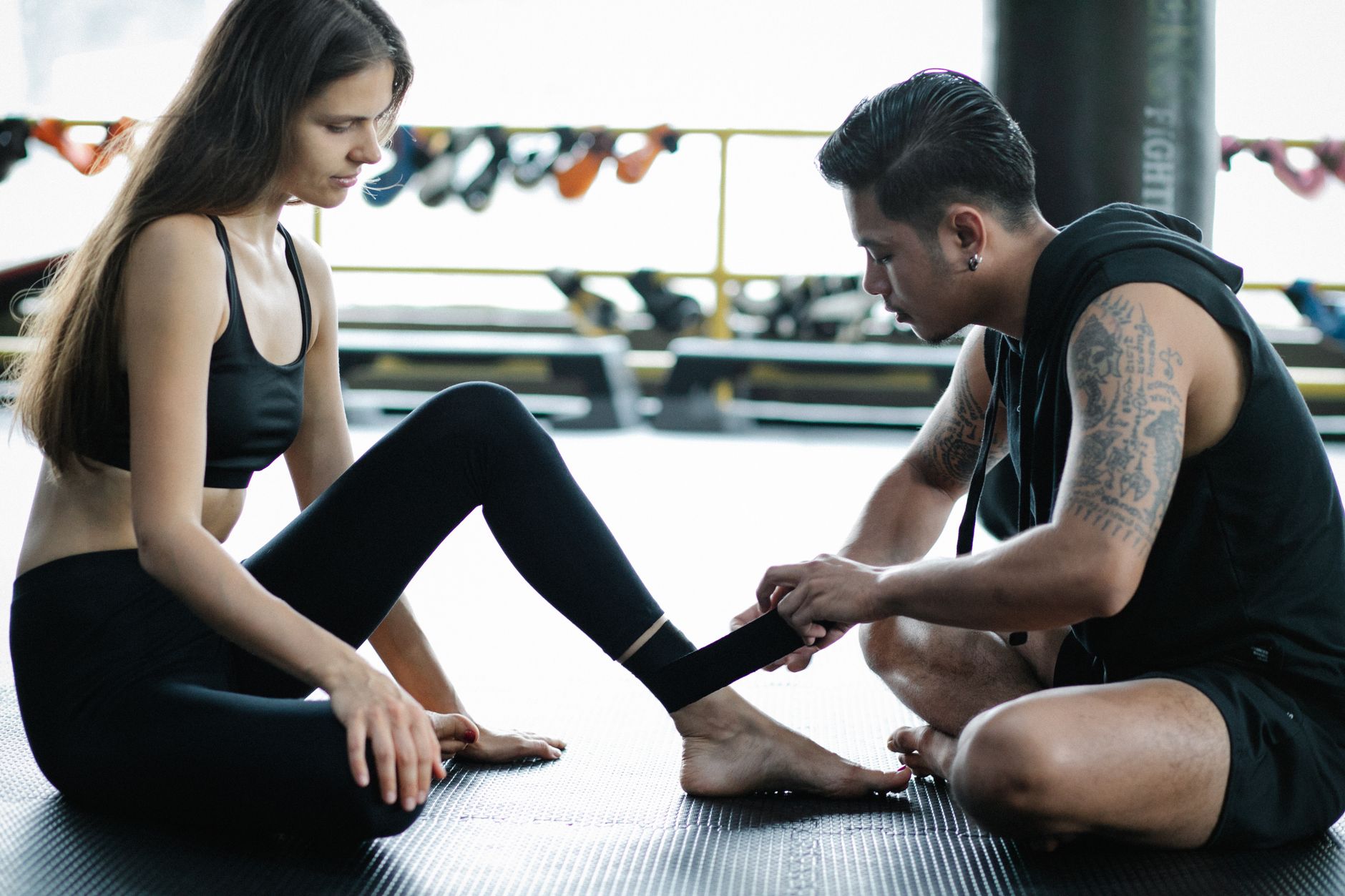
The job splits three ways. There's prevention, which is screening, taping, bracing and conditioning work nobody notices when it's done well. There's acute care, which is the part people picture, and it's a small fraction of the hours. And there's rehabilitation, which is where most of the time actually goes: progressive loading, measuring return-to-play readiness, and telling an athlete who feels fine that they aren't ready.
An athletic trainer is not a personal trainer, and the similarity of the words causes real confusion. This is a licensed clinical role in most states, practiced under physician oversight, with an accredited degree and a national certifying exam behind it. Personal training has none of those things.
How to Become an Athletic Trainer, Step by Step
Durations are typical, not guaranteed. The steps are in the order they actually have to happen.
-
Get a Bachelor's That Covers the Prerequisites
4 years
Kinesiology and exercise science are the usual feeders because they already cover anatomy, physiology, biomechanics and statistics. Your undergraduate degree no longer needs to be in athletic training, and after fall 2022 an undergraduate athletic training major will not make you exam-eligible anyway.
-
Verify the Master's Program Is CAATE-Accredited
do this first
This decides whether everything after it is possible. Only a CAATE-accredited program makes you eligible for the BOC exam, and your program director has to confirm your completion. Check CAATE's own directory, not the program's marketing page.
-
Bank Observation Hours as an Undergraduate
concurrent
Graduate programs want evidence you have watched the work. The athletic training room at your own institution is the obvious place to start, and the relationships you build there matter more than the raw hour count.
-
Complete the Accredited Master's
2 years
Coursework plus supervised clinical education across several settings. Those placements are in person by design, which is why there is very little fully online provision at this level and why you should be skeptical of any program advertising otherwise.
-
Pass the BOC Exam and Get Licensed
months
The exam is $375 in the US or Canada, $495 elsewhere. Application is $75 for NATA members or $100 otherwise. Then apply to your state board, because certification and licensure are two separate things and you need both.
How Much Do Athletic Trainers Make?
The figure quoted for any occupation is normally its median, which is the midpoint of a distribution and not an offer. Both published tails are below.
Annual Wages, U.S.
BLS OEWS · May 2025
- 10th pct
- $48,180
- 25th pct
- $55,130
- Median
- $62,520
- 75th pct
- $74,630
- 90th pct
- $88,760
30,500 people were employed in this occupation nationally.
Where Athletic Trainers Earn the Most
Employment sits beside each median because the two qualify each other. A high median resting on a few dozen jobs is a thinner fact than the same median on thousands.
| State | Median | 10th pct | Employed |
|---|---|---|---|
| California | $78,490 | $54,770 | 1,760 |
| Hawaii | $76,320 | $56,110 | 200 |
| New Jersey | $76,210 | $52,040 | 890 |
| District of Columbia | $74,450 | $59,290 | 100 |
| New Mexico | $72,440 | $47,030 | 150 |
| Massachusetts | $70,010 | $50,560 | 630 |
| Connecticut | $69,960 | $50,900 | 290 |
| New York | $66,230 | $49,990 | 1,370 |
| Utah | $65,980 | $52,680 | 340 |
| Minnesota | $65,390 | $57,910 | 820 |
Athletic Trainer Education Requirements
O*NET reports 54% of respondents saying a master's degree is required and 37% saying a bachelor's. Read that 37% carefully, because it's the most misleading number on this page. It describes athletic trainers already working, most of whom entered under the old bachelor's route before it closed. It does not describe a door you can still walk through.
The rule is simple and it has no exceptions. CAATE stopped allowing baccalaureate programs to enroll students after the fall 2022 term. No CAATE-accredited program, no BOC exam. No exam, no ATC credential. No credential, no license in most states.
So your bachelor's is preparation, and you should pick it that way. What matters is prerequisite coverage, a GPA that survives the sciences, and a department with real relationships to graduate programs. Whether the undergraduate degree has "athletic training" in its title matters much less than it used to. We wrote the change up in full in the guide to the master's transition.
- Master's degree
- 54%
- Bachelor's degree
- 37%
- High school diploma or equivalent
- 8%
O*NET Job Zone 5, extensive preparation needed. Shares do not total 100% because only the most-reported levels are published. O*NET 29-9091.00
Do Athletic Trainers Need a License or Certification?
This is the one route on this site with a hard structural gate rather than an employer preference. Graduating from a CAATE-accredited program is what makes you eligible to sit the BOC exam, and most states then require the ATC credential to license you. Recertification is 50 CEUs every two years once you are past the initial staggered schedule. Everything here is mandatory, which is the opposite of exercise physiology, where certification is what employers want rather than what the law requires.
Where Do Athletic Trainers Work?
Secondary schools and colleges are the traditional base, and they are still where a lot of the jobs are. College athletics is the setting most students picture, and it is also the most competitive, with the longest hours and the most travel.
The growth has been elsewhere. Hospitals and physician practices now employ athletic trainers in outpatient orthopaedics, where the skill set transfers cleanly. So does industry: a manufacturer with a physically demanding workforce has exactly the injury-prevention problem an athletic trainer is trained for, and those jobs tend to pay better and keep more normal hours than the sideline work does.
Geography moves the number more than most occupations here. California pays a median of $78,490 against a national $62,520, and Hawaii and New Jersey are close behind. Our state-by-state breakdown has all 50.
A Day in the Life of an Athletic Trainer
If you work at a high school, your day starts when everyone else's ends. Afternoons are treatments and taping before practice, then you're on the sideline until it finishes, then you're writing up whatever happened. Friday nights in autumn are not yours.
Most of what you do is unglamorous and preventive. You tape the same ankle four times a week. You run the same return-to-play protocol you ran last month. You have the same conversation with a senior who wants to play through something they shouldn't, and you're the person who says no, which makes you unpopular with the athlete and occasionally with their parents.
Then a couple of times a season something happens fast and everything you trained for is happening at once. You're assessing a possible head or spine injury with a crowd watching and a coach asking questions. Those minutes are why the credential is regulated the way it is, and they're why athletic trainers tend to be certain about whether they want this job.
Pros and Cons of Being an Athletic Trainer
Both lists are drawn from the same data as the rest of this page. Nothing here is softened.
What works
- The credential is legally required in most states, which protects the role in a way certification never does.
- It's a real clinical scope. You assess, you decide, you own the rehab, and you do it under physician direction rather than on your own liability.
- At 30,500 jobs it's a genuinely bigger field than exercise physiology, and the settings are diversifying into hospitals and industry.
- The top decile of $88,760 is reachable, and California, Hawaii and New Jersey all pay well above the national median.
What doesn’t
- Six years of tuition now, not four, and nobody raised the salary when the entry requirement moved.
- The hours in school and college settings are genuinely bad: evenings, weekends and travel through the season.
- The median of $62,520 is roughly 40% below what a physical therapist earns, for a route that is only two years shorter.
- You will spend real time telling athletes and coaches things they do not want to hear, and being right is not the same as being thanked.
Programs That Lead Here
Athletic Trainer FAQ
How long does it take to become an athletic trainer?
Do you need a master's degree to be an athletic trainer?
How much does an athletic trainer make?
Is an athletic trainer the same as a personal trainer?
Can you become an athletic trainer with a kinesiology degree?
Is athletic training a good career?
What is the BOC exam and what does it cost?
Do athletic trainers need a license?
Sources
- BLS Occupational Employment and Wage Statistics, May 2025, wages and employment
- O*NET OnLine, 29-9091.00, education distribution and Job Zone
- CAATE, professional program requirements and the fall 2022 cutoff
- BOC, steps to become certified