

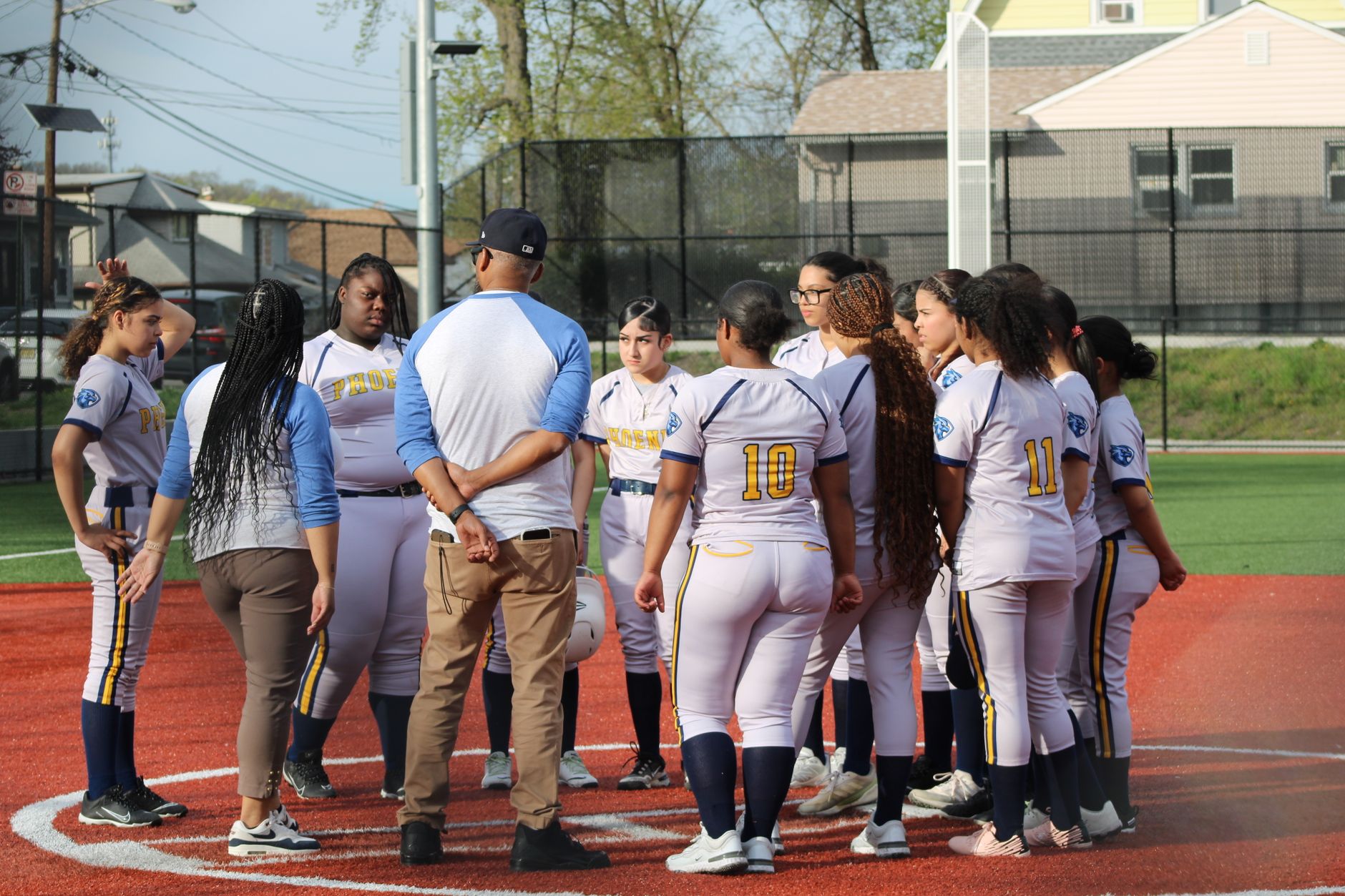
What Does A Coach Do?
A coach teaches competitive technique, plans training, and runs strategy in competition. Scouts evaluate talent for recruitment, and they are a much smaller part of this occupation than the shared BLS title suggests. Most people in this category coach.
What the job actually consists of depends almost entirely on the level. A high school coach teaches skills to people still learning them, manages parents, and usually does it on a stipend attached to another job. A college coach runs recruiting, compliance, film, and a staff, and coaching in the narrow sense is a minority of the week. A strength and conditioning coach in college athletics is closer to an applied exercise scientist, programming for a whole roster against a competition calendar.
The common thread, and the reason a kinesiology degree is useful here, is that the technical content is real. Programming, periodisation, movement assessment and injury risk are the difference between a coach who improves athletes and one who just organises them.
How to Become a Coach, Step by Step
Durations are typical, not guaranteed. The steps are in the order they actually have to happen.
-
Get a Bachelor's, Commonly Kinesiology or Exercise Science
4 years
Half of respondents named a bachelor's. Kinesiology is a natural fit because programming and movement science are the transferable technical content, and it keeps other doors open if coaching does not work out.
-
Decide School or College Early, Because the Routes Diverge
during the degree
School coaching usually rides on a teaching post, which means teacher certification and a subject to teach. College coaching runs on graduate assistantships and networks. These are different plans and choosing late costs you.
-
Coach Something Now
concurrent
This field hires on demonstrated coaching more than on credentials. Youth clubs, camps, volunteer assistant roles at your own institution. The experience and the references are what get you the first paid job.
-
Get the Credential Your Niche Expects
months
Teaching certification for school roles. The CSCS for strength and conditioning, which costs $340 for NSCA members. Sport governing bodies run their own coaching licenses for club pathways.
-
Take the Graduate Assistantship If College Is the Goal
1 to 2 years
The 19% reporting a master's largely reflects this. A graduate assistantship is how college coaching staffs are entered, and it usually pays little while covering tuition.
How Much Do Coaches Make?
The figure quoted for any occupation is normally its median, which is the midpoint of a distribution and not an offer. Both published tails are below.
Annual Wages, U.S.
BLS OEWS · May 2025
- 10th pct
- $28,790
- 25th pct
- $35,330
- Median
- $47,320
- 75th pct
- $64,710
- 90th pct
- $98,860
248,950 people were employed in this occupation nationally.
Where Coaches Earn the Most
Employment sits beside each median because the two qualify each other. A high median resting on a few dozen jobs is a thinner fact than the same median on thousands.
| State | Median | 10th pct | Employed |
|---|---|---|---|
| New Jersey | $76,700 | $39,720 | 5,670 |
| District of Columbia | $65,360 | $36,400 | 630 |
| Louisiana | $60,960 | $23,310 | 2,550 |
| Vermont | $59,990 | $37,240 | 630 |
| New York | $59,920 | $34,890 | 11,220 |
| Hawaii | $55,860 | $37,040 | 760 |
| Massachusetts | $55,130 | $35,940 | 6,310 |
| Connecticut | $54,790 | $34,010 | 4,070 |
| Rhode Island | $53,630 | $34,580 | 1,170 |
| Arizona | $53,130 | $36,880 | 4,120 |
Coach Education Requirements
The education distribution here is the most scattered on the site: 49% bachelor's, 19% master's, 17% associate's. That is not noise, it is two or three different hiring markets sharing one occupation code.
High school coaching is frequently a stipend attached to a teaching contract, so the real requirement is a teaching credential and the coaching is additional. O*NET is explicit that postings requiring teaching certification belong in the teaching occupations instead, which is part of why the wage figures for this category are hard to read.
College coaching runs on a different engine: graduate assistantships, playing background and networks, with the master's often collected along the way rather than before starting. Collecting it while you are already on a staff is where format starts to matter, and the online kinesiology master's programs, ranked is the shortest way to see which of them can survive a season of travel. And strength and conditioning is the most technical corner, where a kinesiology degree does the most work and the CSCS is the expected credential.
So "what education do you need to be a coach" has no single answer. Pick the market first, then the credential follows from it.
- Bachelor's degree
- 49%
- Master's degree
- 19%
- Associate's degree
- 17%
O*NET Job Zone 4, considerable preparation needed. Shares do not total 100% because only the most-reported levels are published. O*NET 27-2022.00
Do Coaches Need a License or Certification?
No single national credential governs coaching. School-based roles usually require a teaching certificate, and O*NET explicitly routes those postings to the teaching occupations. Sport governing bodies run their own coaching licenses for club and youth pathways. Strength and conditioning in college athletics is where the NSCA CSCS is effectively expected, and its eligibility rules tighten in 2030: from 1 January 2030 US candidates will need a bachelor's from a CASCE-accredited program. If strength and conditioning is the goal and you are choosing an undergraduate program now, that is worth checking before you enroll.
Where Do Coaches Work?
Schools and school districts employ the largest number, mostly part-time or as stipends on top of teaching. Colleges and universities are next, spanning head coaches, position coaches, graduate assistants and strength and conditioning staff.
Beyond education there are private clubs and academies, which have grown fast in youth sport and hire more on results and reputation than on degrees. Professional sport is the visible tip and a vanishingly small share of the 248,950 jobs.
Geography behaves oddly here compared with the clinical occupations. New Jersey leads on median pay at $76,700, well clear of the national $47,320, with the District of Columbia and Louisiana next, and those gaps say as much about which local roles are salaried rather than stipended as about pay rates. Our salary page has all 49 areas.
A Day in the Life of a Coach
A high school season looks like this: teach all day, then practice from three until six, then film or planning, then a couple of hours of messages from parents who want to talk about playing time. Game days are longer. Saturdays in season are not really yours, and the stipend divided by the hours is not a number most coaches like calculating.
College strength and conditioning starts earlier than everyone else. Lifting groups from six, rotating squads through the morning, programming and screening in the middle of the day, then the afternoon groups. You are on the floor coaching technique for most of it, and you own the detail of what every athlete is doing and why.
What nobody outside the job appreciates is how much of coaching is managing people rather than teaching sport. Athletes, parents, administrators, other coaches. The technical part is the part you trained for, and it is not what fills the day.
Pros and Cons of Being a Coach
Both lists are drawn from the same data as the rest of this page. Nothing here is softened.
What works
- A large field at 248,950 jobs, with entry points at almost every level of skill and commitment.
- The top decile of $98,860 is genuinely high, and college and private-academy roles can go well beyond it.
- You can start coaching immediately, while still a student, and the experience counts more than the credential.
- A kinesiology degree does real technical work here, especially in strength and conditioning.
What doesn’t
- The bottom of the range is poor. A 10th percentile of $28,790 is a real outcome, not a theoretical floor.
- Hours in season are punishing and largely unpaid at the school level, where the role is a stipend.
- Job security follows results and administrative changes, and coaching turnover is high by any standard.
- Most school roles require a teaching credential, so coaching alone is often not a job you can be hired into.
Programs That Lead Here
Coach FAQ
How much does a coach make?
What degree do you need to be a coach?
How do you become a strength and conditioning coach?
Is coaching a good career?
Do you need a teaching license to coach?
What is the difference between a coach and a scout?
Can you coach with a kinesiology degree?
Sources
- BLS Occupational Employment and Wage Statistics, May 2025, wages and employment
- O*NET OnLine, 27-2022.00, education distribution and Job Zone